From participant to teacher: Lucas and Amélie were raised with Roeland
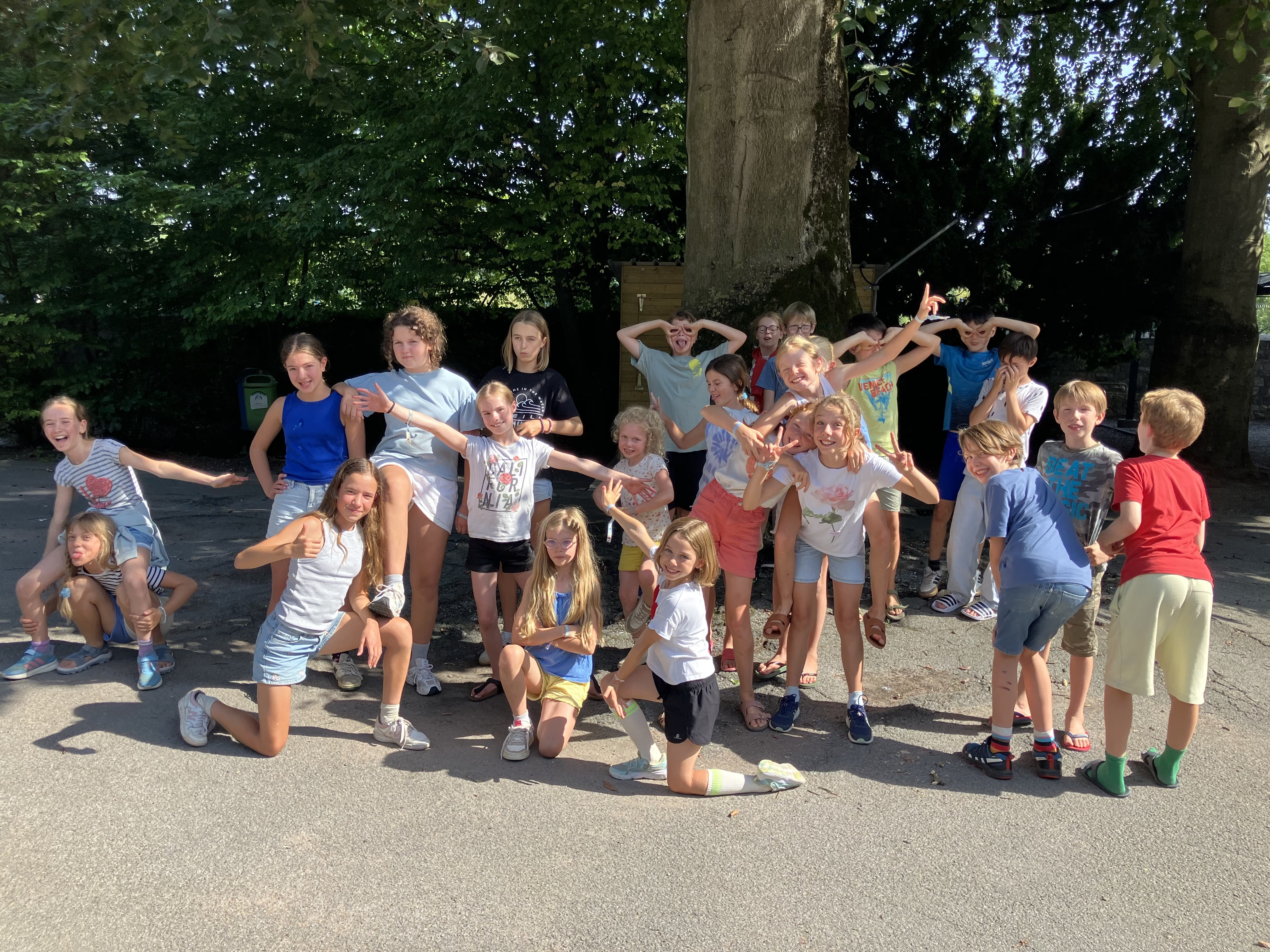
Lucas was six years when he went to his first Roeland camp. Amélie was nine. Today they are teachers at Roeland camps. How do they look back on their very first camp visits?
Lucas currently trains at Arteveldehogeschool in Ghent to become a secondary school teacher. Amélie signed up for a bilingual program to obtain a bachelor’s degree in law studies at KU Leuven and UCL Saint-Louis in Brussels. And they agree: language camps changed their views on language and the world in a permanent way.
Language fun that lasts
“My sister gently forced my hand to sign up for my first Junior French language camp”, Lucas says with a smile. “It was a three day-camp, during Autumn recess. I had so much fun that I convinced my parents to sign me up for the next one too.”
Amélie especially remembers her enthusiasm to learn French. “I remember my desire to understand and speak French when I was still young. And while at camp, I was allowed to speak Dutch with my friends. That in particular makes these language camps accessible to young children. You’re at camp for just a week, but you pick up a lot of novel words.”
Dare to speak, making mistakes is allowed
“My sense of language really expanded because of these camps”, Lucas confirms. “It allowed me to start French classes with a head start compared to my classmates”.
And Amélie adds: “With Roeland, you can learn French in a playful and creative way: through games, theatre, sports and music. Because you actually hear and use language in a day-to-day situation you soak it up effortlessly, so to speak”.
She also emphasizes the safe learning environment: “The teachers only speak French, but they are well aware of the fact that children still need to get a firm grip on the new language. You can build a profound connection based on trust because they explain everything meticulously. The teachers also take part in all the activities.
A convivial camp with plenty of memories
“My favourite moment? The ‘dodo’ time”, a smiling Amélie says. “It’s a little play performed by the teachers, every night before bedtime. When I was little, me and my stuffed animal just sat there and listened and got completely dragged in by the story”.
Friendships foremostly, that’s what Lucas recalls. “What stays with me primarily are the people I was lucky enough to have met. Now that I am a teacher, I also want to gift our camp participants the camp experience of a lifetime: days filled to the brim with fun, language, and long-lasting friendships”.